What is Excessive Reassurance Seeking & Why Do We Do It?
Typically, when you feel anxious, you may do something to try and make yourself feel better. This is what we call a coping strategy. Excessive reassurance seeking is a very common coping strategy for those who get anxious about things. Reassurance can come from the self, from others, or from things like the internet, and examples can include asking friends or family members for their opinion, speaking to medical staff, such as your GP, midwife, or health visitor, excessive googling and internet searches, and bodily checking.
Let’s look at an example. You’re feeling anxious about putting the baby down for a nap. You have a vivid image pop into your head of the baby climbing out of their cot, causing them to hurt themselves. What do you get the urge to do? The chances are, your answer is to go and check, and that is logical if your thought/worry is true. The checking will likely make you feel better when you notice that the baby is fast asleep and the cot is lowered to an appropriate height for their age and therefore perfectly safe.
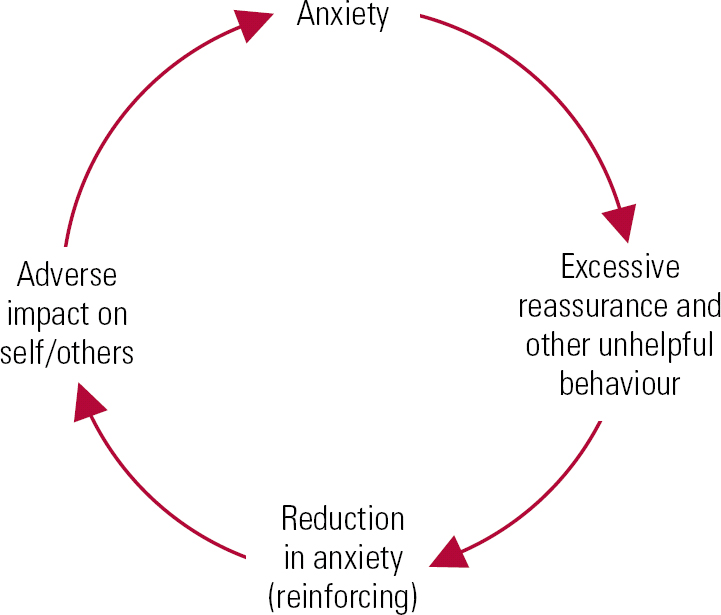
When the above starts to become unhelpful is when each time a worry or anxious thought pops into your head, you will likely feel anxiety, and the anxiety will only tend to improve once you’ve got your reassurance. Until the next worry pops up. Did I put the baby monitor on? What if the baby has rolled over in her cot and can’t breathe? What if the cot isn’t as safe as I think it is? All these thoughts can make you anxious, and the anxiety can lead you to need reassurance that you are ok, that you are safe, and that nothing is wrong. Read Unhelpful Coping Strategies Explained to learn more.
What are the Disadvantages of Needing Reassurance when Anxious?
Reassurance can be like a drug – the more you get, the more you need. I’ve worked with people that have needed so much reassurance from their family member that their relationships have become strained. Family members can unwittingly collude with your anxiety because they don’t like to see you distressed so they can give you the reassurance they know you need to calm you down.
The problem with this is that getting reassurance from others increases your doubt and decreases your confidence in your own judgement. So, reassurance, like many things we work on in CBT, becomes a vicious cycle. The initial solution (getting reassurance to make you feel better) has become a problem (because you are likely unable to cope with your anxiety without getting that reassurance).
With anxiety relating to health, reassurance can be a problem because it can only tell you what the problem isn’t, not what the problem is. Also, the effectiveness of reassurance tends to be very short-lived, with some getting to the point that they start to doubt medical professionals or worry that something may have been missed.
How Can I Stop Seeking Reassurance?
The first step is to acknowledge it. The more you can identify when you are needing it, the better you’ll be able to try and make small but effective changes. When you have noticed it, try and delay getting the reassurance from wherever you would typically get it from. Try and sit with the anxiety, and the uncertainty of whatever is making you anxious.
This can be hard, but practice makes progress, so keep trying and gradually increasing the time from when you are wanting to get that reassurance to when you get it. Your end goal is to try and reduce reassurance seeking as much as possible, so that you can learn to improve on your confidence and to reduce your self-doubt.
It might take a while to notice a difference, and you may find that you feel more anxious initially. That is completely normal! Not nice for you, but expected. The more you persevere, the more you will be able to overcome the need to get excessive reassurance, leading to you starting to rely more on your own judgement.
Therapy for New Mums
If you’re struggling with anxiety or any other aspect of motherhood, I can help. Reach out for support by booking a consultation here or subscribe to The Nurture Toolkit for free, actionable tips and prompts straight to your inbox. I also share lots of encouragement and support via Instagram.
Useful Links
Can Childhood Adversity Cause Anxiety?
Generalised Anxiety Disorder & How To Manage Excessive Worrying